Aviation
The de Havilland Mosquito: 86 Years Since First Flight
— Written by admin in Aviation
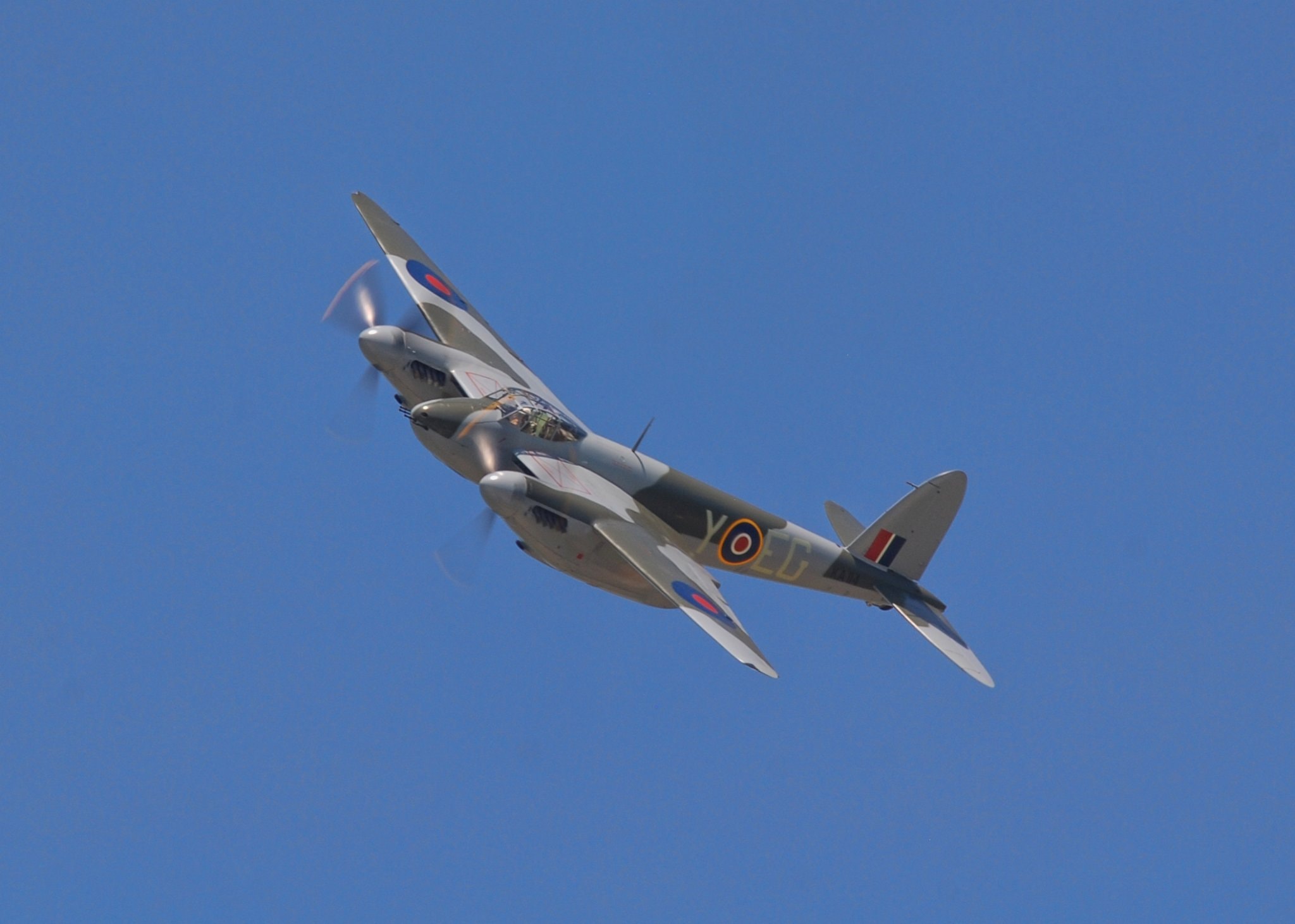
Eighty-six years ago today, on November 25, 1940, a strange-looking twin-engine aeroplane took off from Hatfield in England for the first time. Geoffrey de Havilland Jr. flew the prototype, W4050, for about half an hour. It was built almost entirely of wood — and it would go on to become one of the most remarkable aircraft of the Second World War.
The de Havilland Mosquito was born out of a radical idea: build a fast bomber out of plywood and balsa, with no defensive guns at all, and simply outrun anything that tried to catch it. The Air Ministry was sceptical at first, but the Mosquito proved the doubters wrong. When it entered service it was one of the fastest operational aircraft in the world, and it stayed fast — outrunning most fighters of the day.
In all, 7,781 Mosquitos were built, and they served in just about every role an aeroplane could: bomber, night fighter, fighter-bomber, photo-reconnaissance aircraft, maritime strike, pathfinder. It was the "Wooden Wonder" — and it was built, in large part, by the same kind of woodworking skills that made furniture and pianos.
The Canadian Mosquitos
More than a thousand of those 7,781 were built in Canada. De Havilland Canada built 1,032 Mosquitos at its factory in Downsview, near Toronto, Ontario — a Canadian chapter of the story that is easy to overlook.
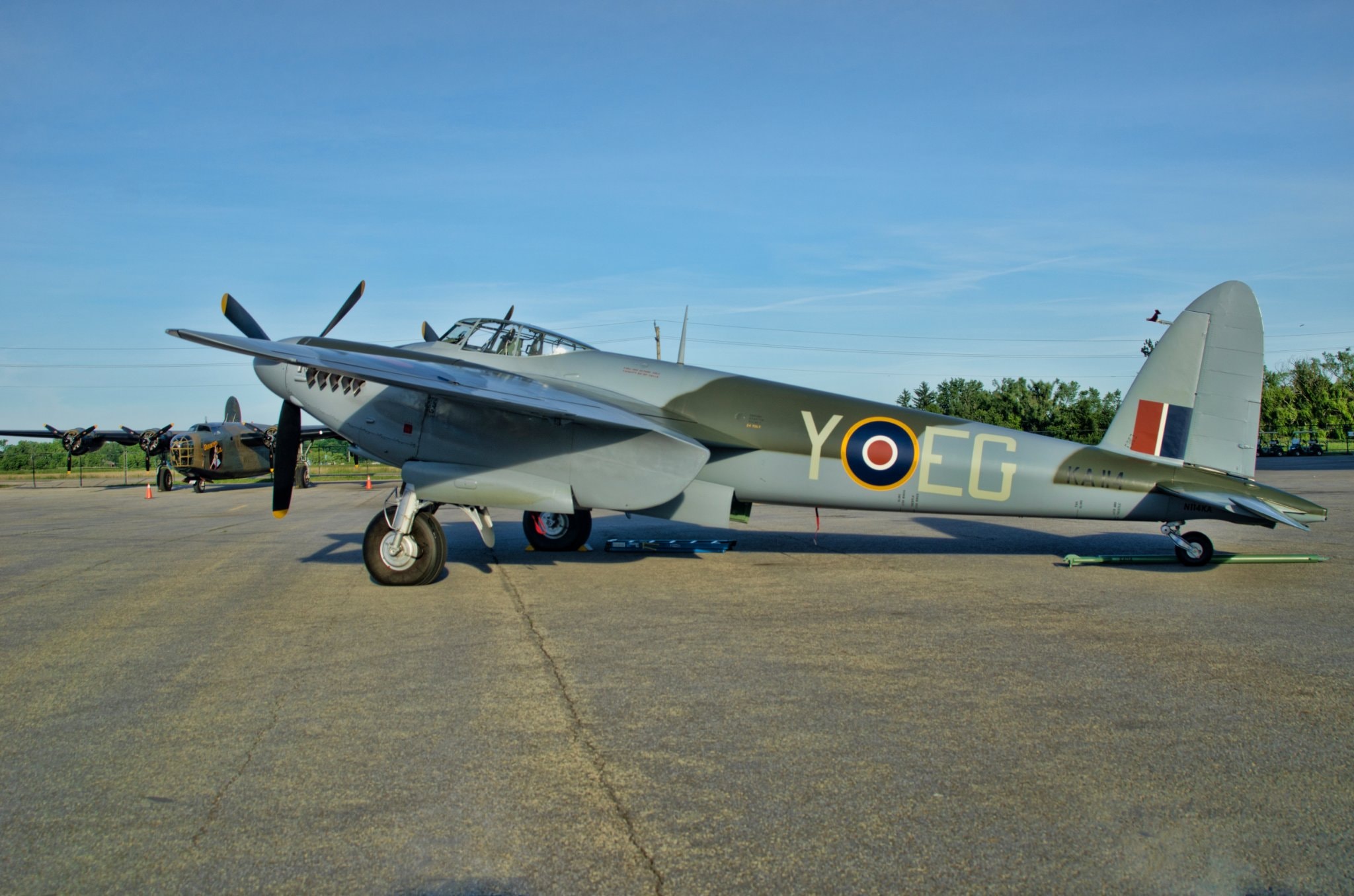
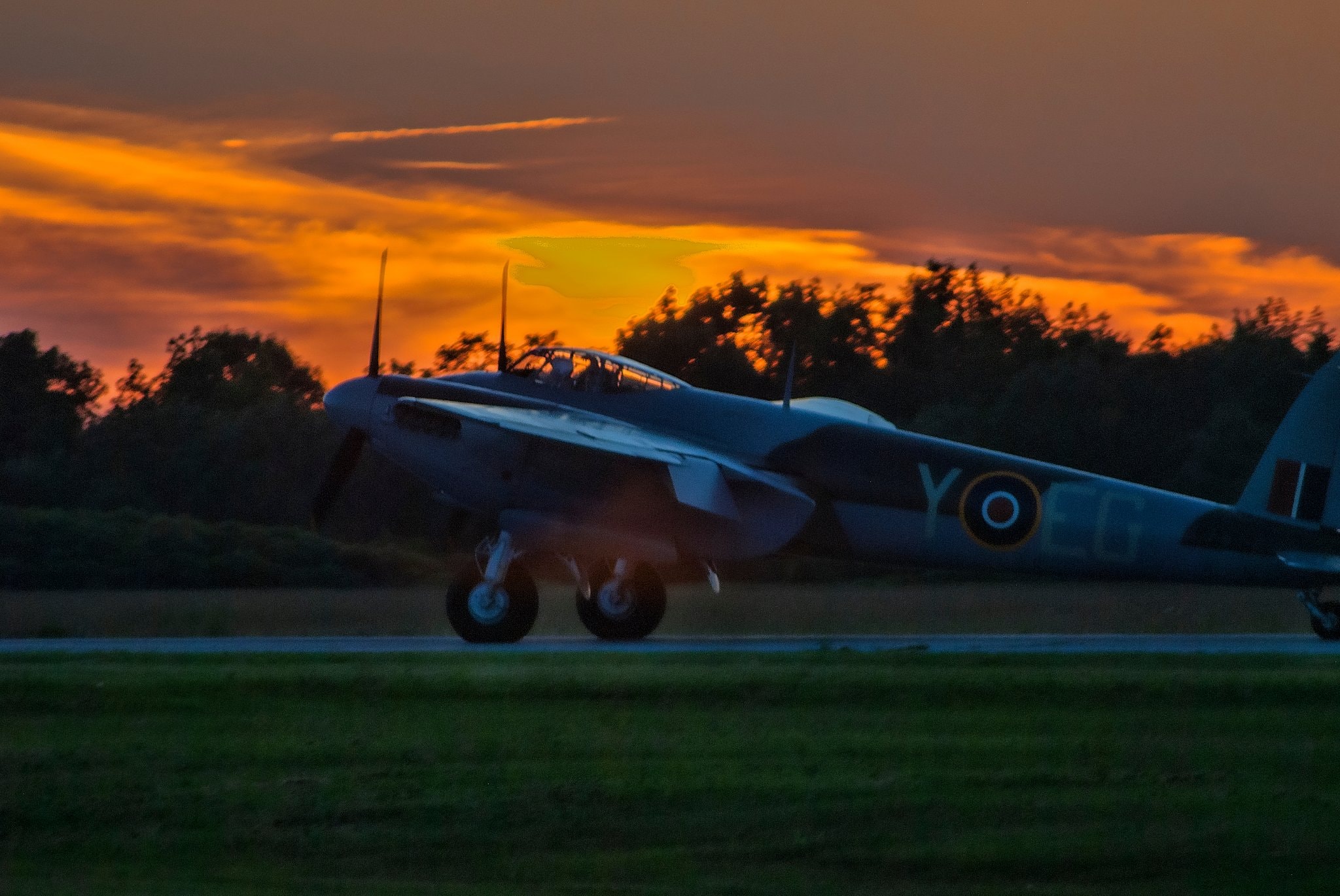
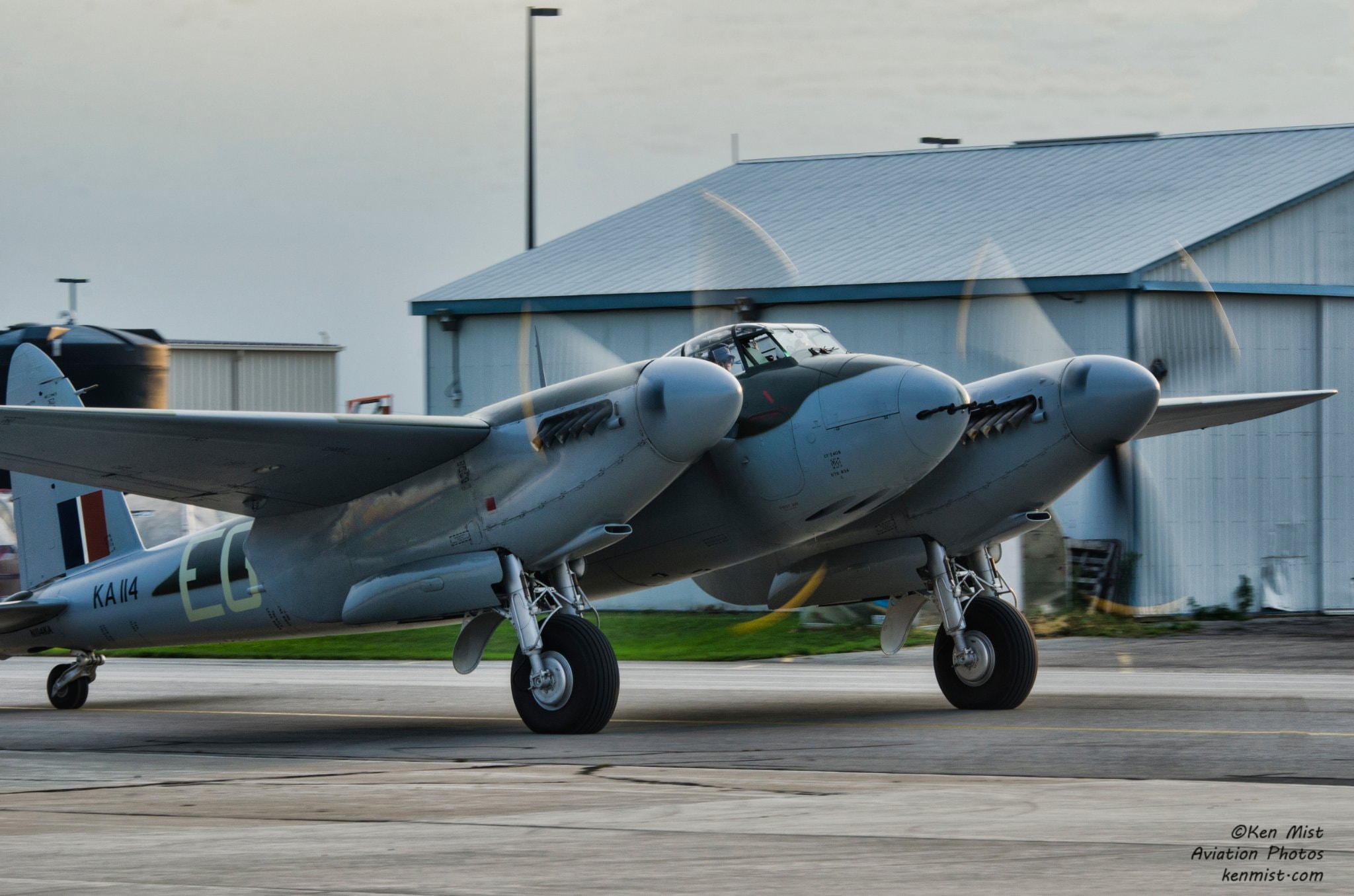
One of those Canadian-built aircraft is the Mosquito in my photographs: FB.26 KA114.
KA114 was taken on strength with the Royal Canadian Air Force on February 22, 1945. After a brief spell with No. 7 Operational Training Unit at Debert, Nova Scotia, it went into storage, ending up at RCAF Vulcan, Alberta. The RCAF struck it off strength on April 13, 1948, and it was sold to a farmer in Milo, Alberta — for $150, by one account — where it sat outdoors for thirty years. Parts were stripped off it over the years, the engines and propellers taken away, and at one point it reportedly served as a hen house.
The Canadian Museum of Flight and Transportation acquired the remains in 1978, and in 2004 the Military Aviation Museum in Virginia Beach, Virginia, bought the project and shipped it to Avspecs Ltd. in Ardmore, New Zealand, for restoration. It was a ground-breaking, eight-year rebuild: Glyn Powell of Auckland built a brand-new wooden fuselage, wings and tail, using moulds he had spent years making, while many of the original metal parts were reused.
On September 27, 2012, KA114 flew again — at the time, the only flying Mosquito anywhere in the world. It arrived at the Military Aviation Museum in March 2013, and it flies regularly at airshows in the United States and Canada. It wears the EG-Y codes of 487 Squadron, Royal New Zealand Air Force, in tribute to the New Zealanders who brought it back to life.
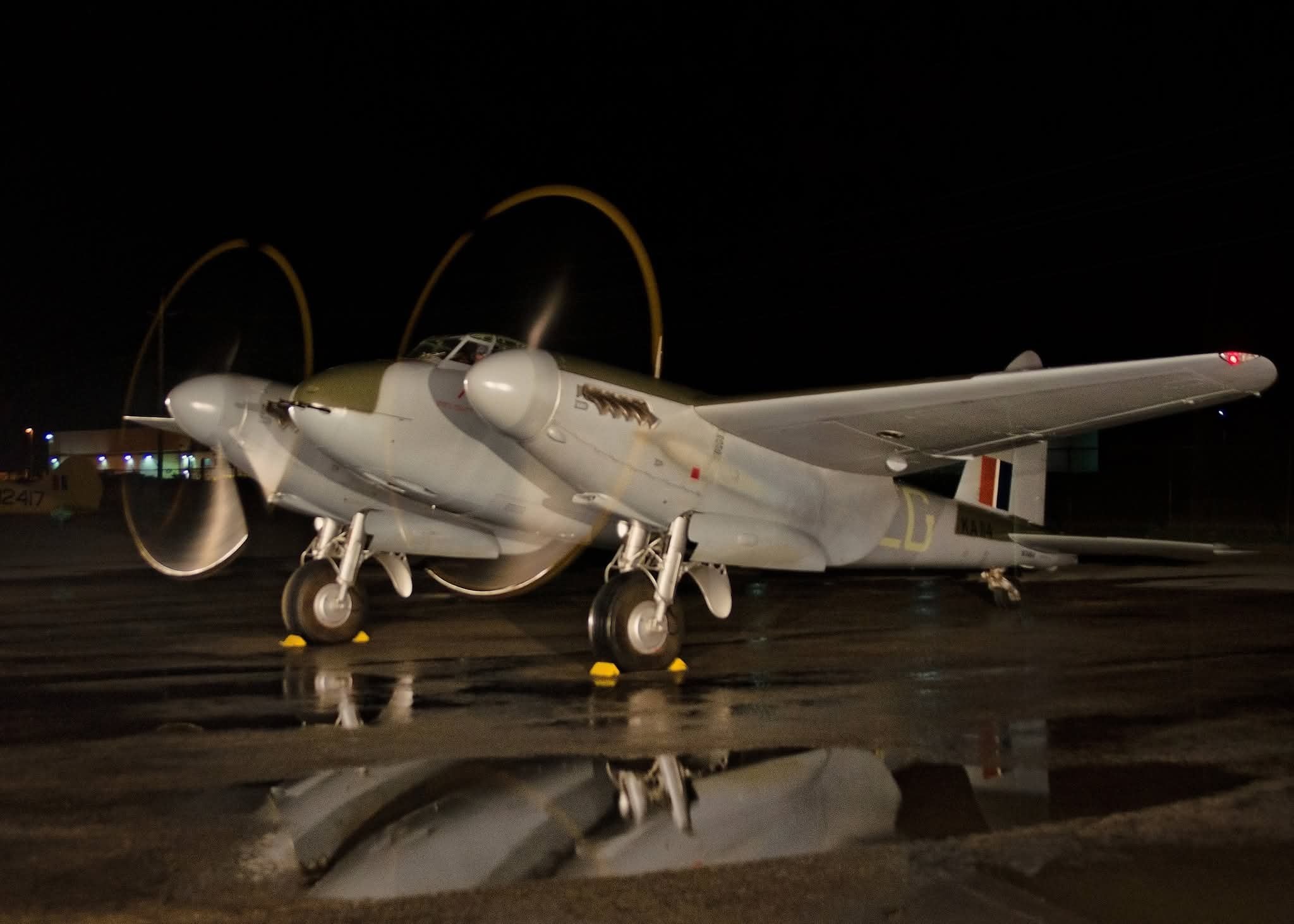
The photographs in this post were taken at the Canadian Warplane Heritage Museum in Hamilton, Ontario.
Eighty-six years after the first flight, the Wooden Wonder still flies — and this one came home to North America by way of an Alberta farm field.