Aviation
The Last Flight of Concorde: 23 Years Since the Supersonic Era Ended
— Written by admin in Aviation
#TDIH — November 26, 2003 — Last flight of Concorde, the iconic supersonic passenger jet. British Airways G-BOAF left London's Heathrow airport and flew to Filton, Bristol, where it was built.
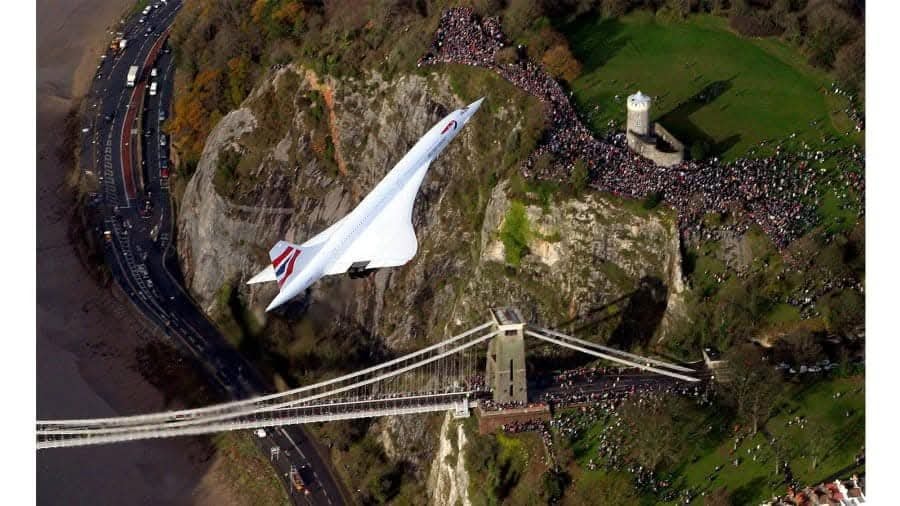
G-BOAF, call sign "Alpha Foxtrot," departed Heathrow at 11:30 that morning and flew a lap of honour over Bristol — past Portishead, Clevedon, Weston-super-Mare and Bristol Airport — before sweeping low over the Clifton Suspension Bridge, where thousands had gathered to watch. It touched down at Filton just after 1:00 p.m., back where it had first taken off 24 years earlier. No Concorde has flown since.
Alpha Foxtrot was the 20th and last Concorde built. It first flew on April 20, 1979, from Filton, and over its career it flew 18,257 hours. Its last revenue flight had been on October 1, 2003, from New York to London as British Airways flight 2; the final scheduled Concorde service of all, from New York, landed at Heathrow on October 24, 2003.
Concorde was an Anglo-French achievement — the first prototype flew in 1969, and the aircraft entered service in January 1976 with British Airways and Air France. It cruised at Mach 2.04, over twice the speed of sound, at 60,000 feet, carrying up to 100 passengers from London to New York in under three and a half hours. Twenty were built; fourteen entered commercial service.
Today G-BOAF is the centrepiece of Aerospace Bristol, the museum at Filton — parked a few hundred yards from where she was built, the closest the Concorde programme has to a homecoming.