Aviation
The McDonnell Douglas F/A-18 Hornet: 48 Years Since First Flight
— Written by admin in Aviation
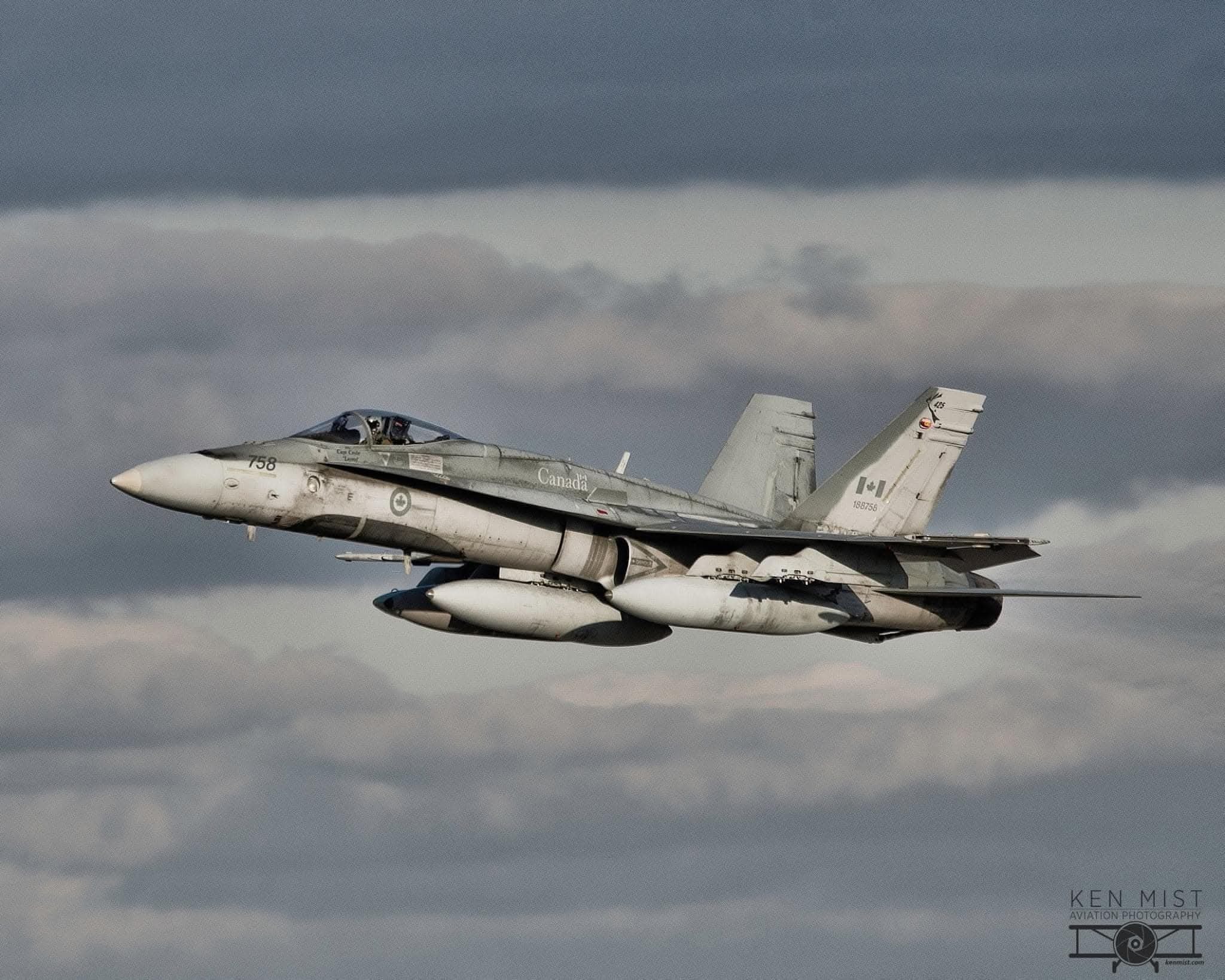
Forty-eight years ago today, on November 18, 1978, the McDonnell Douglas F/A-18 Hornet flew for the first time. Test pilot Jack Krings lifted the first F-18A off Lambert Field in St. Louis, two months after its rollout on September 13. It was the start of a career that would make the Hornet the US Navy and Marine Corps' standard multirole fighter — and, for Canada, the backbone of air defence for more than four decades.
The Hornet began as a loser. Northrop's YF-17 Cobra lost the US Air Force's lightweight fighter competition to the YF-16, the design that became the F-16 Fighting Falcon. But the US Navy saw what it needed in the twin-engine YF-17 and picked it as the basis for its Naval Air Combat Fighter program. McDonnell Douglas became prime contractor, with Northrop as partner, and the design was navalized — strengthened for carrier landings, with folding wings, heavy landing gear and an arrestor hook — and given two roles in one airframe: fighter and attack, hence the F/A designation. Two General Electric F404 turbofans powered it, and 1,480 legacy Hornets (A/B/C/D models) were built.
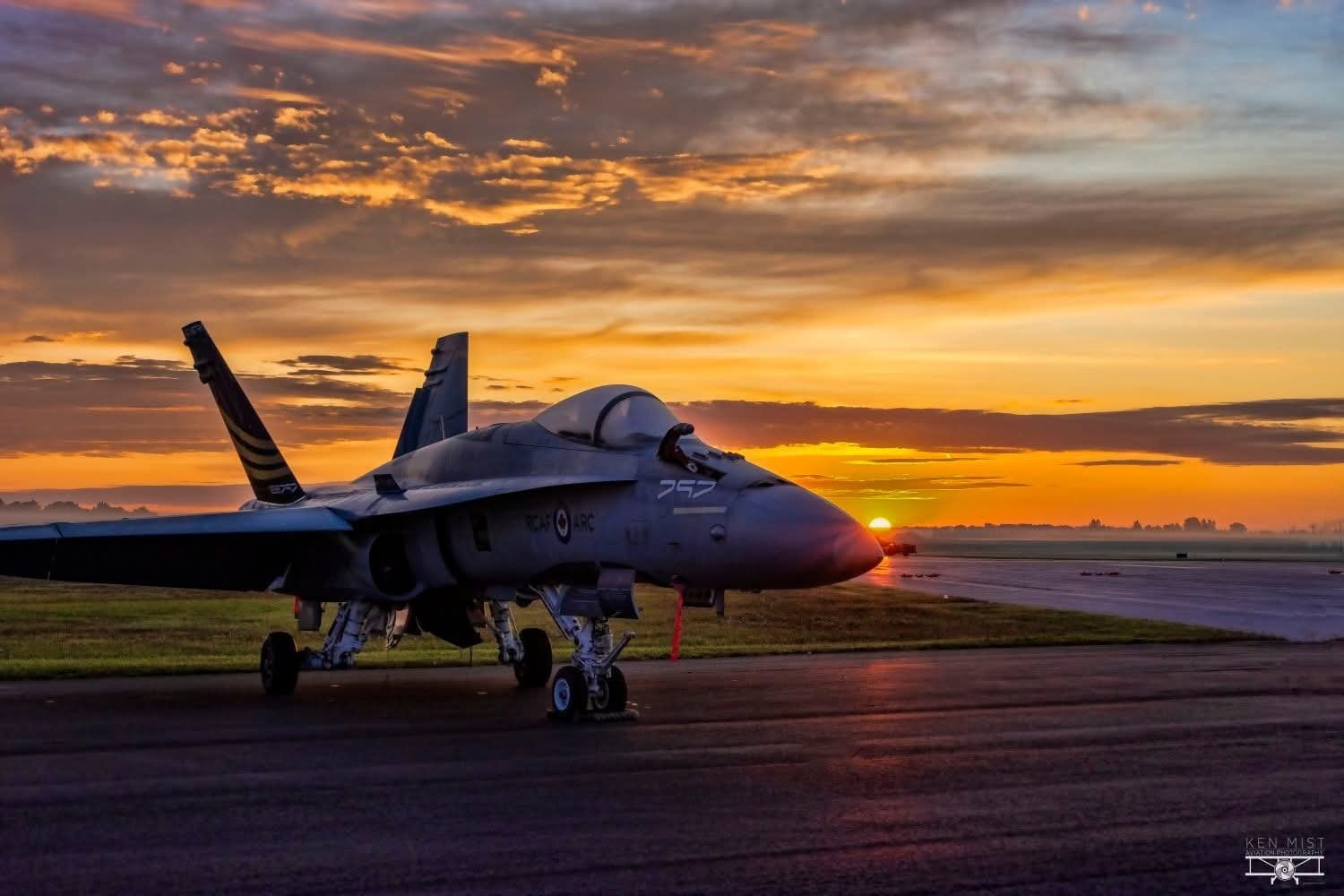
Canada's Hornet story began in April 1980, when the F/A-18 won the New Fighter Aircraft competition to replace the CF-104 Starfighter, the CF-101 Voodoo and the CF-116 Freedom Fighter. Canada ordered 138 aircraft — 98 single-seat CF-188As and 40 two-seat CF-188Bs — at a cost of $4 billion, delivered between 1982 and 1988. The first two were formally handed over to 410 Squadron at CFB Cold Lake on October 25, 1982.
The CF-18 — officially the CF-188, though almost nobody calls it that — has been the RCAF's front-line fighter ever since. It has flown combat over Iraq in the 1991 Gulf War, over Kosovo in 1999, over Libya in 2011, and over Iraq and Syria in 2014–16, and it stands the NORAD quick-reaction alert from Cold Lake and Bagotville, where 401, 409 and 410 Squadrons and 425 and 433 Squadrons are based. Through upgrades including the Hornet Extension Project, about 89 Hornets remain in service, and the fleet is slated to fly until 2032, when the F-35A force is fully in place.
Forty-eight years after Jack Krings' first flight, the Hornet is still on the job — a long way from the prototype that lost a competition.