George "Washington" Jones — Woodstock's Town Crier
For a quarter of a century, the loudest voice in Woodstock belonged to a man who was never appointed to anything. George Jones arrived in 1925, put on a silk top hat and a swallowtail coat, picked up a bell and a megaphone, and appointed himself town crier.
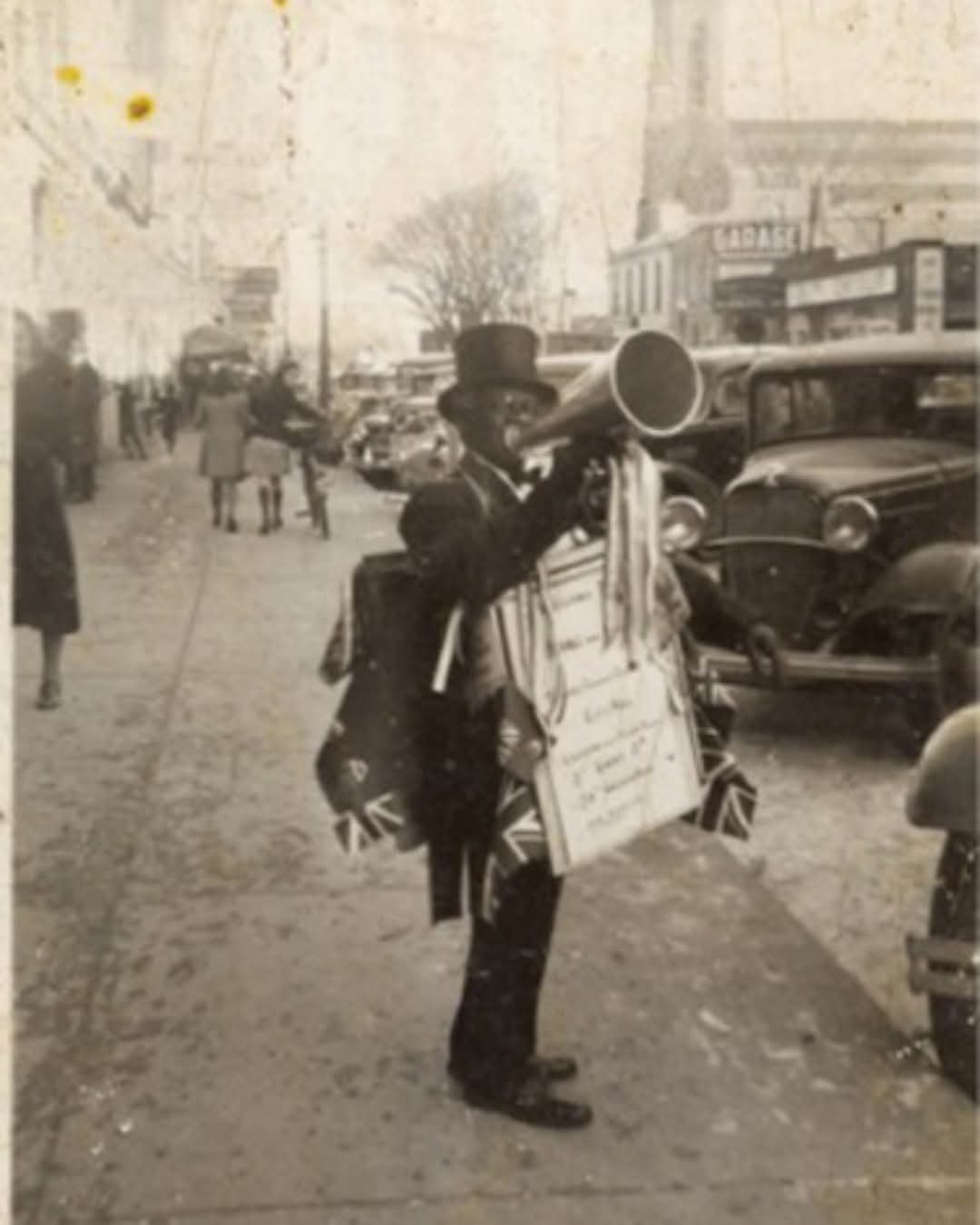
For a quarter of a century, the loudest voice in Woodstock belonged to a man who was never appointed to anything. George Jones arrived in 1925, put on a silk top hat and a swallowtail coat, picked up a bell and a megaphone, and appointed himself town crier. Woodstock went along with it — and loved him for it.
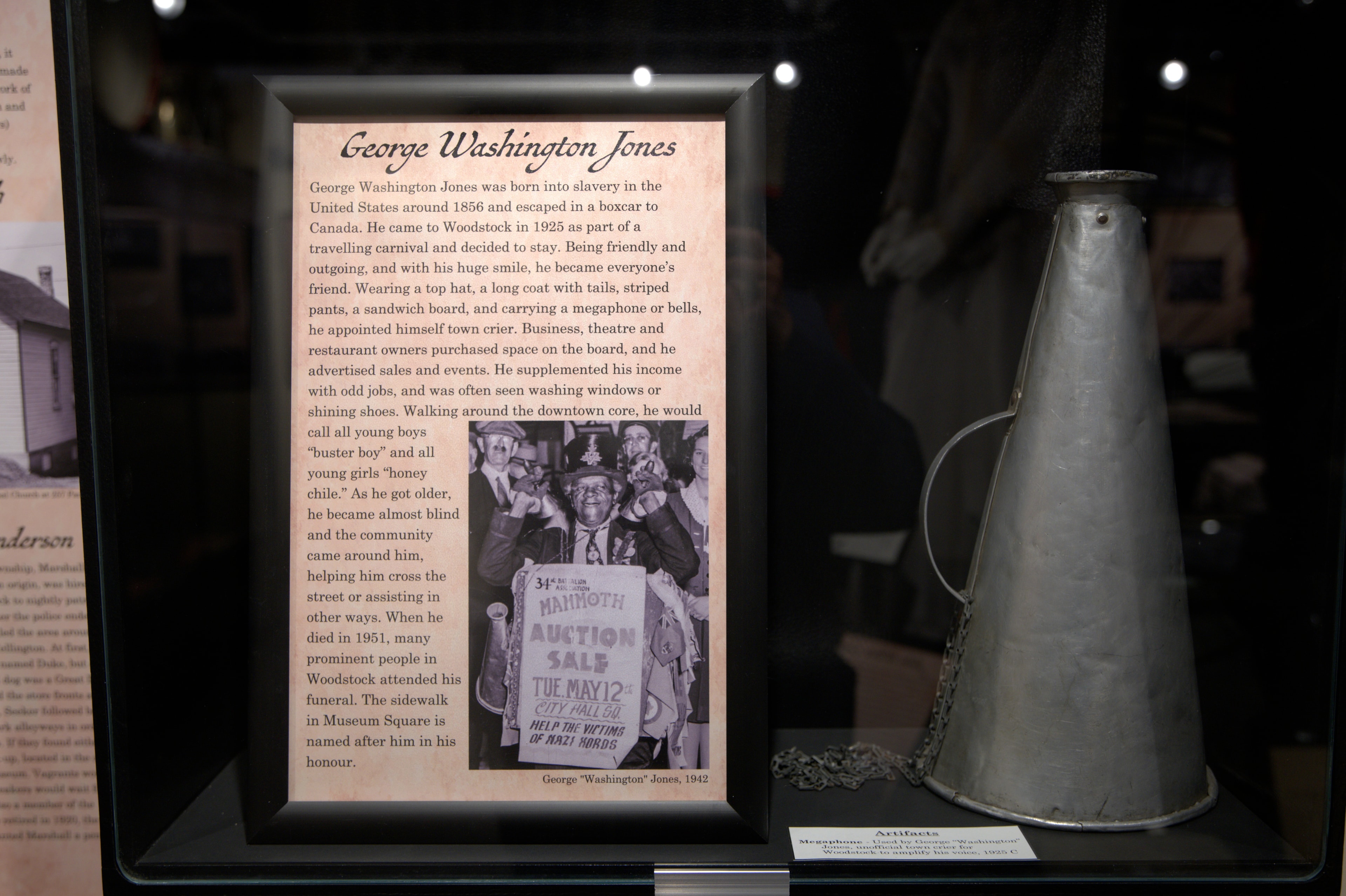
He had been born, by his own account, into slavery in the southern United States around 1856. Not much is known of his early life, and even his age was uncertain. Before Woodstock he lived in Chatham, Ontario, under the name George Gravy, where he worked as a shoeshine artist at the Hotel Rankin and the old Hotel Garner, and was on speaking terms with Kent County's political figures of the day — Archie McCoig, MP, later a Senator, among them.
In Woodstock, the people nicknamed him George "Washington" Jones. It was a name he did not care for, but it stuck — and it is the name Woodstock remembers him by.
Dressed in his top hat and swallow-tailed coat, bedecked with medals, badges and flags, sandwich board on his chest and megaphone in hand, Jones paraded up and down Dundas Street advertising hockey and baseball games, Saturday night dances, the Lion's carnival, the Woodstock Fair and the Rotary Bingo. Local merchants hired him to advertise their products and services. He started out with a silver trumpet, which gave way to a single or double hand-bell, rung before each announcement, and then the brass megaphone — the one now kept in the Woodstock Museum.
His voice was the stuff of legend. It was said his booming cry could be heard in Eastwood, five miles away, if the wind was right. During the Second World War, Woodstock men serving in England claimed they could hear George announcing the regular Saturday night dances. He was a friendly fellow who called almost everyone "Buster Boy" — and the very few, "My friend."
Crying was only part of how he made his living. He shined shoes and washed windows, with a shoeshine stand in the back of Sam Kostis' restaurant at 369 Dundas Street. As his eyesight failed in later years, he tapped his way around town with a white cane, and it was common to see some prominent citizen helping him across the street.
George Jones died on December 8, 1951, at the House of Refuge. His friends arranged a proper funeral, and he was buried in the Baptist Cemetery in Woodstock, with prominent local businessmen as his pallbearers. In 1952, the same friends, spearheaded by Percy Canfield, took up a collection and erected a headstone that reads: "George Jones, 1856–1951, Town Crier."
Woodstock never forgot him. In 1994, composer James Gordon wrote a song about him for CBC Radio's Ontario Morning program, after the city's then town crier, Scott Fraser, wrote to him about George:
"George Washington Jones would walk
With a sandwich board and a bell,
All through the streets of Woodstock
And any local will tell
You that there was no finer town crier,
No one more loved in this town..."
On August 6, 2004, close to 300 Woodstock residents gathered as the pathway leading to the Woodstock Museum was named in his honour: the George Washington Jones Walk.
Fraser himself had been appointed Woodstock's official town crier by city council in 1992, after campaigning to revive a position that had been silent since George's death — Woodstock's first crier, William Dill, is little more than a name in the records, and even the year he served is uncertain. Fraser went on to found International Town Criers Day, first celebrated in 1997. Today the city's crier is Michael Lieber of Sylvania, Ohio — Woodstock's sister city — who marches in the Santa Claus Parade each year.
And this December, seventy-five years after George Jones died, the Woodstock Museum will hold a George Jones Day in his honour — Tuesday, December 8, 6:30 to 8:00 p.m., admission free — with the song, a spoken-word tribute, historian Rosemary Sadlier, and a chance to meet an active town crier. Seventy-five years after he fell silent, Woodstock is still listening for his cry.
Explore Topics
Written by
admin
Content creator and writer sharing insights and stories.